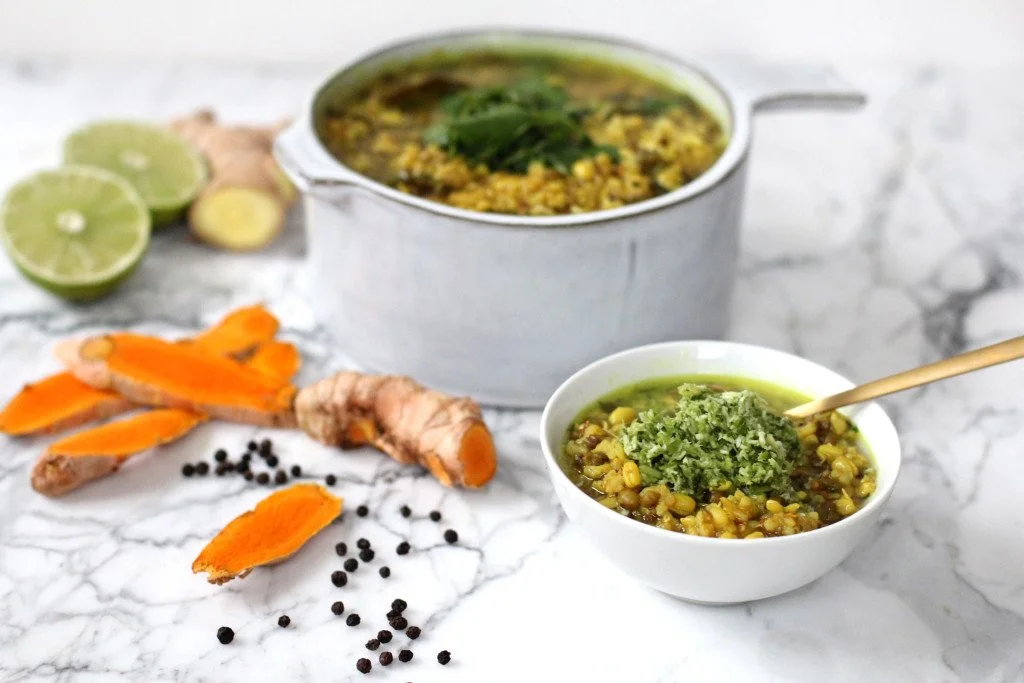
This winter kitchari leans into warming, pungent spices like ginger, mustard seed, cumin, and black pepper to kindle agni, encourage circulation, and counter the cold, heavy qualities of the season. Whole mung beans are an option when you want a heartier, more rustic kitchari, but they require an overnight soak; if digestion is feeling sluggish or sensitive, split mung beans cook down more quickly and are traditionally considered easier to digest. Kitchari is one of Ayurveda’s most versatile one-pot meals—simple enough for everyday nourishment, yet often used for short periods of monodieting when the body benefits from a lighter, uncomplicated diet. Enjoy it thick and stew-like or add more water for a brothy consistency, with ginger chutney alongside for an extra burst of digestive warmth.
PREP: 15 minutes + soaking time COOK: 30-40 minutes YIELD: 2 servings kitchari + ¼ cup chutney
Ingredients
Kitchari:
½ cup whole mung beans, soaked overnight
½ cup white basmati rice, rinsed
1 tablespoon ghee
1 tablespoon fresh ginger root, minced or grated
¼ teaspoon mustard seeds
½ teaspoon cumin seeds
4 whole cloves
½ teaspoon ground turmeric
¼ teaspoon ground cinnamon
¼ teaspoon ground black pepper
½ teaspoon mineral
5-6 cups water
Ginger Chutney:
3 tbsp umeboshi or rice vinegar
¼ cup fresh ginger, minced
½ teaspoon mineral salt
½ teaspoon unrefined cane sugar or coconut sugar
Instructions
For the Kitchari: Drain and rinse the soaked mung beans, rinse the rice. In a large pot, warm the ghee over medium heat. Add ginger and cook for 1-2 minutes until fragrant. First, stir in the mustard seeds, cumin seeds, cloves, and ground black pepper, sauté for 30-60 seconds. Then stir in the ground turmeric and cinnamon.
Add the mung beans and rice, stirring to coat everything in the spices. Add 5 cups of water and the mineral salt, then bring to a boil. Reduce the heat, cover partially, and simmer for 30-40 minutes, or until the beans and rice are very soft and the kitchari reaches your desired consistency. Add more water as needed for a thinner, soupier kitchari.
For the Ginger Chutney: While the kitchari cooks, prepare the chutney. Combine the vinegar and ginger in a small saucepan over low heat. Gently simmer for 5-10 minutes, stirring occasionally, until the ginger softens and the flavors meld. Remove from the heat and stir in the salt and sugar. Transfer to a clean glass jar and allow to cool fully, uncovered. Store sealed in your refrigerator until ready to use.
Serve the kitchari warm with a spoonful of ginger chutney.
Cooking Notes
When to Add Veggies: If using harder vegetables, like carrots, beets, or other root vegetables, add them when you add the water so they have plenty of time to cook down thoroughly. Leafy greens and fresh herbs can be stirred in at the end.
Soaking & Rinsing Notes: If using whole mung beans, soak them overnight to soften and support easier digestion. Split mung beans (the yellow ones called split mung dal are simply the green ones split in half with the skin removed) only need a thorough rinse and do not require soaking; always rinse the rice well before cooking, but a long soak is not necessary for basmati rice.
Instant Pot Instructions: Drain and rinse the soaked mung beans and rice, then add them to the Instant Pot with the ghee, ginger, spices, salt, and 6 cups of water. Cook on High Pressure for 15 minutes, allow a natural pressure release for 10–15 minutes, then stir and add more water as needed to reach your desired consistency.
Dosha Notes
V: Add a pinch of hing (asafetida)
P: Omit mustard seeds and black peppercorns
K: Enjoy as is or reduce ghee and salt as needed
Nutrition
(Per serving)
Calories: 350 kcal
Protein: 17 g
Fat: 8 g
Carbs: 65 g
Sugar: 2 g
Fiber: 10 g
Shop Kitchen Essentials
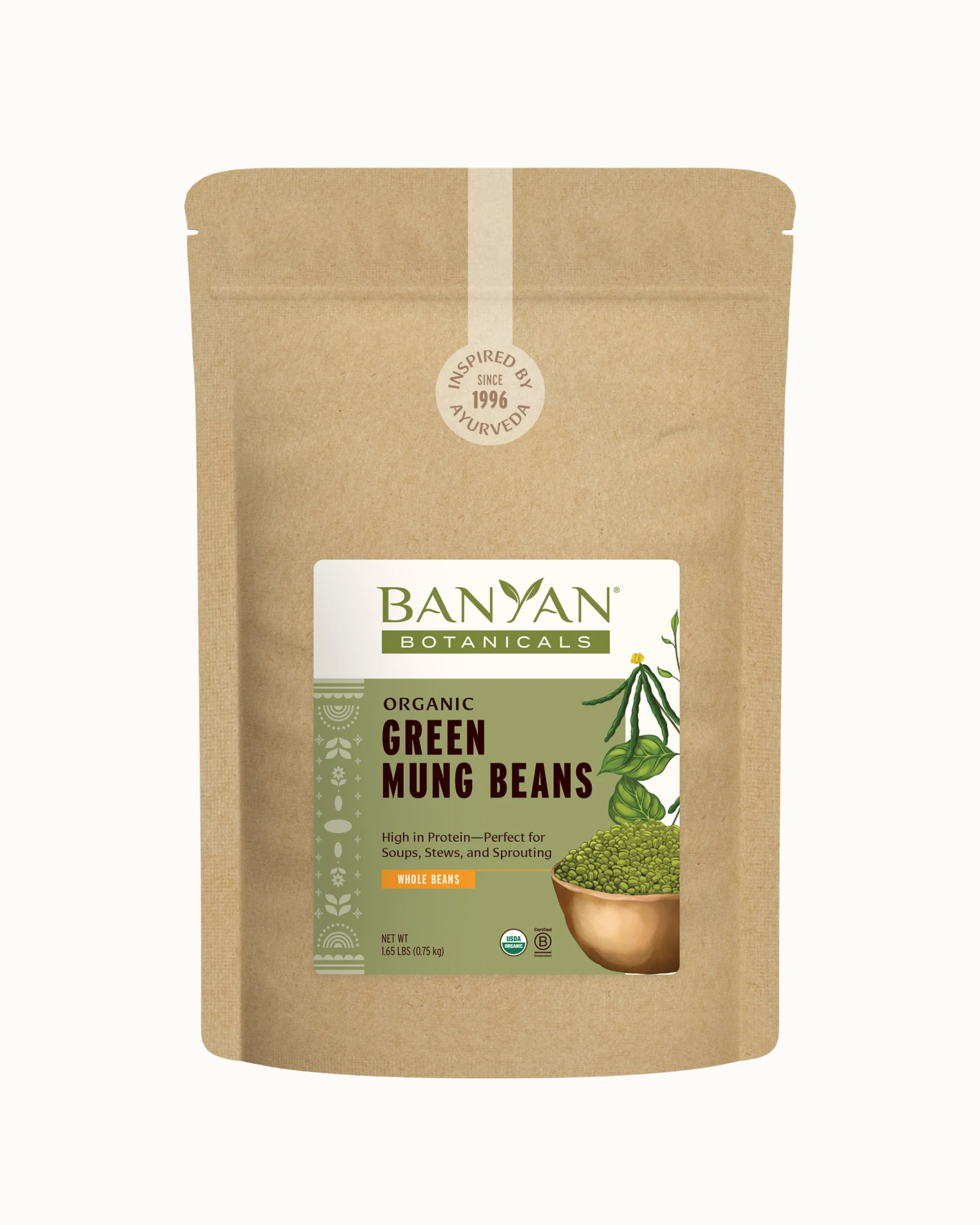
Whole Mung Beans
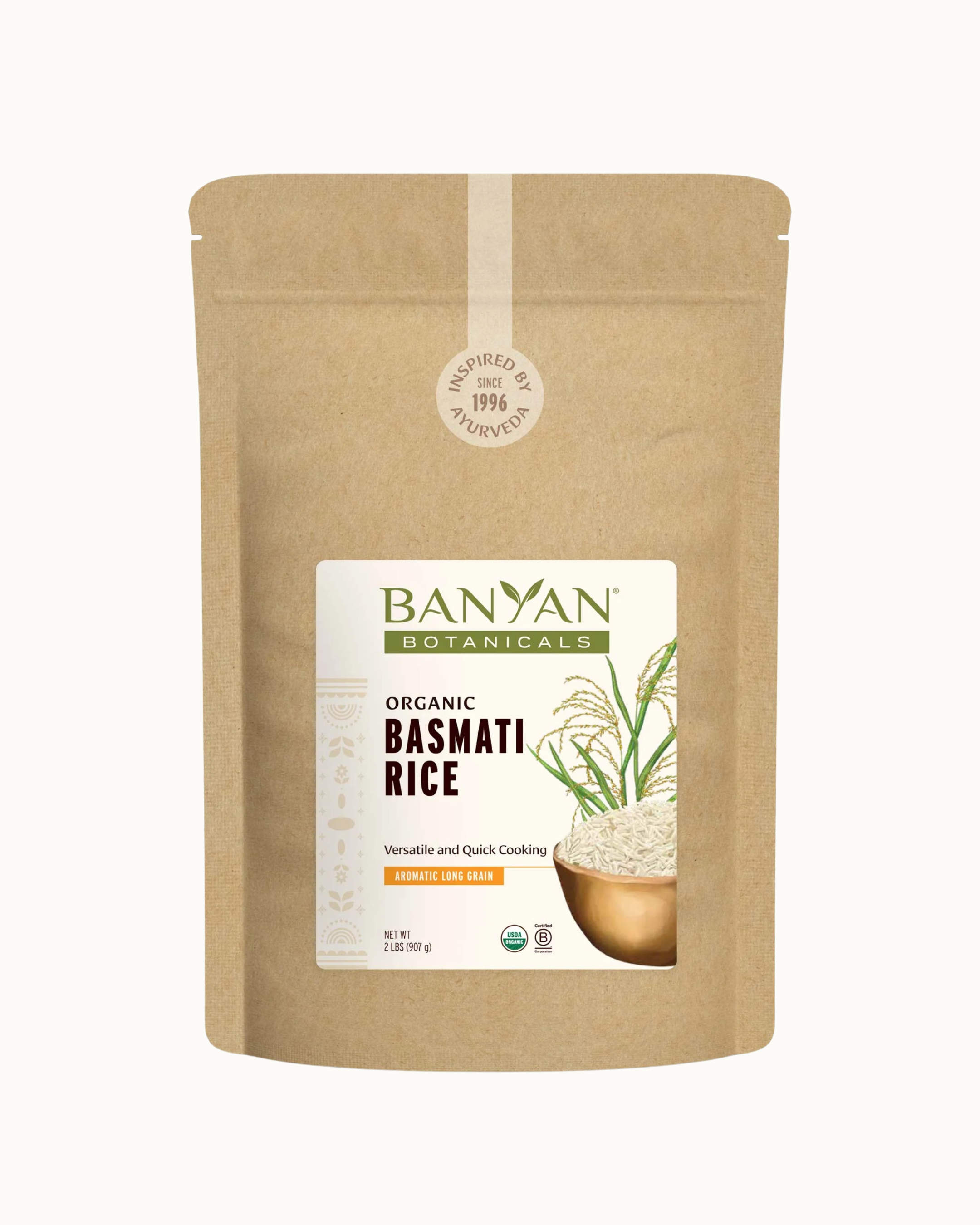
Basmati Rice
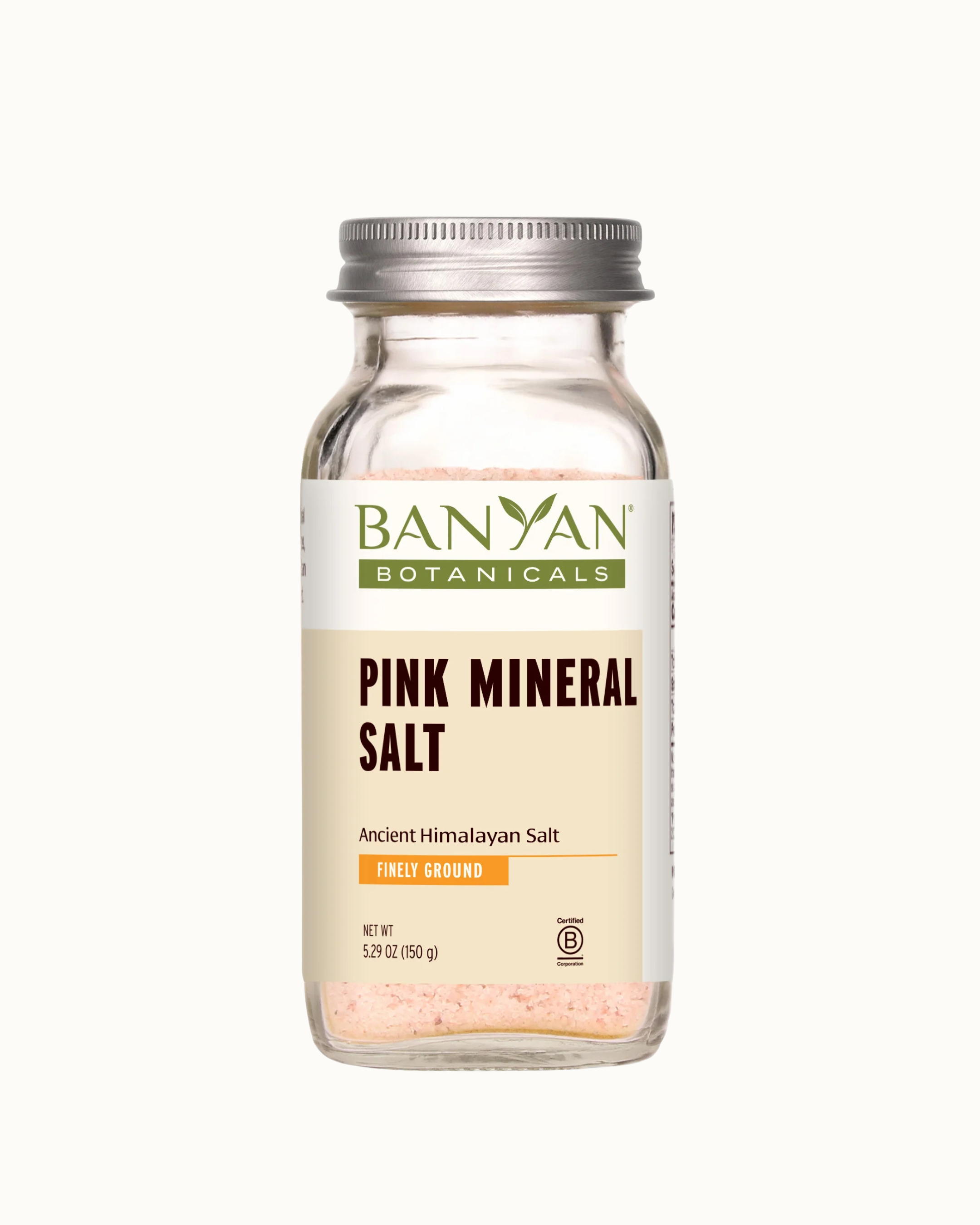
Pink Mineral Salt

Ground Turmeric