Ghee is revered in Ayurvedic cooking and healing protocols, valued for its deeply nourishing, tridoshic qualities. You’ll find it in almost every Ayurvedic recipe. When cultured butter is slowly simmered to remove its milk solids, it becomes a light, easily digestible oil that supports digestion, strengthens ojas, and serves as a carrier that helps medicinal herbs and nutrients penetrate deeply into the body’s tissues. Its high smoke point makes it ideal for cooking, while its traditional uses extend beyond the kitchen to Ayurvedic skincare, therapeutic treatments, and even for ceremonial offerings. Though ghee is traditionally crafted from hand-churned butter or cultured cream, the following method is the most approachable for daily home use—simple enough to weave into a regular rhythm in your kitchen. I like to make ghee in the waxing moon or full moon time and chant mantra while cooking to infuse these benefits into each jar. If you’re curious, watch the traditional method of ghee making here!
PREP: 5 minutes | COOK: 25–30 minutes + cooling time | YIELD: 2 cups (450 g) ghee
Ingredients
2 lbs. organic unsalted butter (cultured, if available)
Instructions
To make about 2 cups (450 g) of ghee, place 2 pounds (900 g) of high-quality, organic unsalted butter in a heavy-bottomed saucepan or pot. Melt the butter over medium heat, then reduce the heat to low once it has completely melted.
As the butter simmers, water will evaporate and the milk solids will separate, creating a layer of foam on the surface and solids that gradually settle to the bottom. Skim the foam from the surface as needed and discard or save it for another use. Let the butter gently simmer uncovered for about 25–30 minutes, or roughly 15 minutes per pound, until the bubbling has nearly stopped and the liquid becomes clear and translucent with a light amber hue. Keep the heat low and watch carefully toward the end to prevent the milk solids from burning.
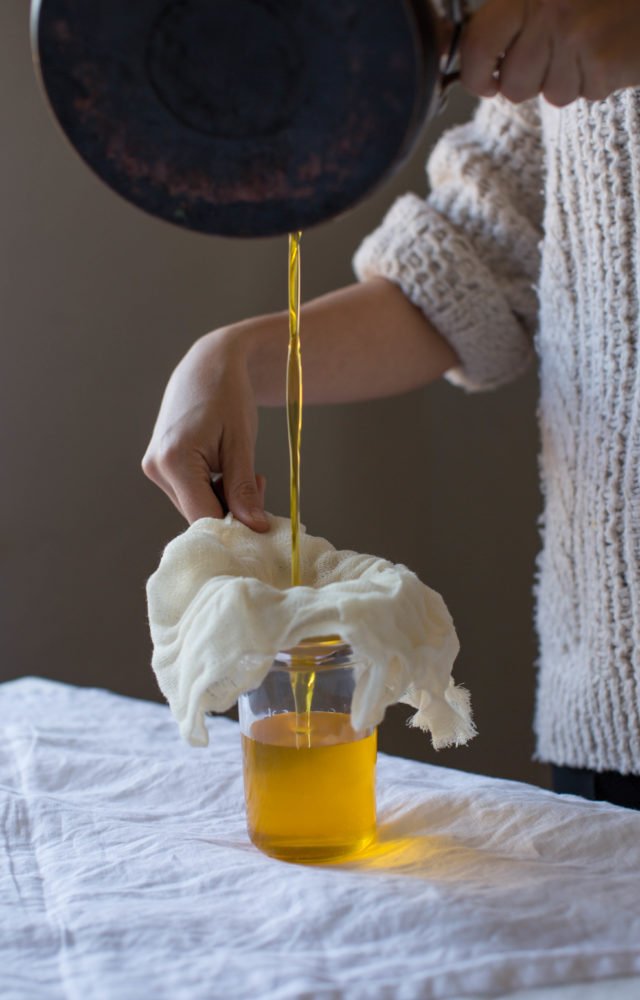
Remove from the heat and let cool for about 15 minutes. Strain the ghee through a fine-mesh strainer lined with cheesecloth, a coffee filter, or a clean paper towel into a completely dry, heat-safe jar. Allow the ghee to cool uncovered for about 30 minutes before sealing so condensation doesn’t collect inside the jar.
Once completely cool, seal the jar and store it in a cool, dry place for up to 3 months, or refrigerate for longer storage. In warm or humid climates, I recommend keeping ghee refrigerated. Always use a clean, completely dry spoon when taking ghee from the jar, and make sure the jar and utensils are thoroughly dry to prevent moisture and contamination.
Cooking Notes
Keep the heat low: Once the butter has melted, maintain a gentle simmer. High heat can cause the milk solids to burn before the water has fully evaporated. This shift can happen fast once the pan is hot, you may even remove it from the heat or take it halfway off the heat to slow the cooking time down if you have a very hot burner.
Watch for the finish: Ghee is ready when the bubbling has nearly stopped and the liquid is clear, golden, and translucent, with the milk solids settled and lightly browned on the bottom. Some people scoop the excess foam off the top, some allow it to slowly boil off. Once done, remove from heat and allow to cool for 15-20 minutes before pouring into jars.
Keep everything dry: Make sure your jar, strainer, and spoon are completely dry before using. Any moisture can shorten ghee’s shelf life, especially in warm, humid climates. You also want to keep the lid off the jar while it cools. If you seal too quickly after pouring the ghee into jars, condensation can get trapped in the jar and the excess moisture will spoil the ghee quickly. Don’t rush this cooling step.